HVAC · the USA
Technicians record measurements on site and adjust the plan when field conditions differ from the original estimate. The same crew completes both removal and placement so questions about existing wiring or duct connections stay with people who have already seen them.
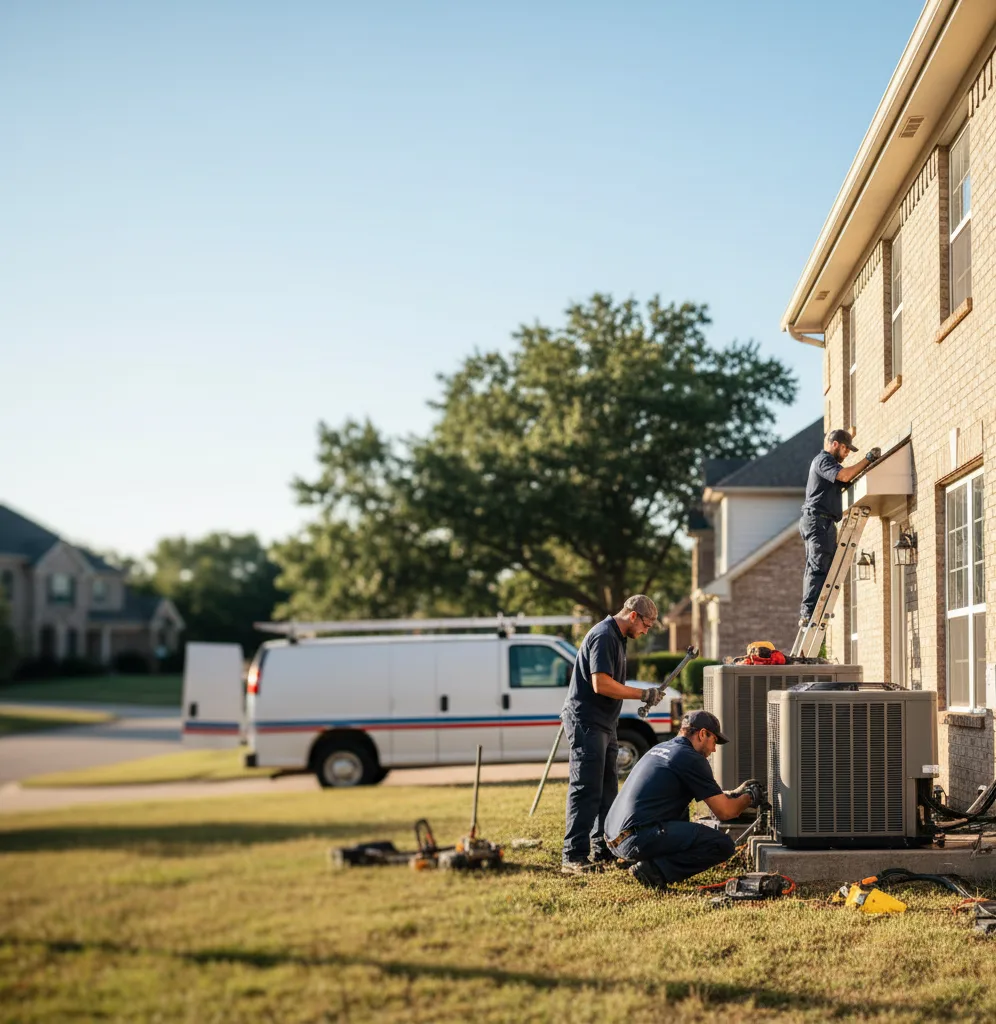
Homes accumulate changes over time that affect cooling performance. Added rooms, new windows, or upgraded appliances can shift the original load calculation. When an older unit runs longer yet leaves certain areas warmer, the mismatch often traces back to these alterations rather than simple age or the need for AC repair. A technician measures current conditions room by room instead of relying on the nameplate from the previous installation.
The visit begins with a review of the existing air handler, condenser location, and refrigerant line set condition. Technicians note insulation thickness in attics and crawl spaces because missing or compressed material changes required capacity. Electrical service is verified to confirm the panel can support the new amperage draw without upgrades. These details determine whether the project stays within a straight swap or requires additional HVAC maintenance work.
FAQ

Short cycling often comes from an oversized system, a dirty filter that restricts airflow, or a failing thermostat that misreads room temperature. The technician checks the temperature split across the coils and reviews the recent run times logged by the control board. Once the cause is identified the repair focuses on restoring steady operation rather than masking the symptom.
The price depends on the location of the leak, whether access requires removing panels or moving ductwork, and how much refrigerant must be recovered and replaced. Small leaks in accessible lines are often less expensive than those inside the coil itself. A full diagnosis is needed before an accurate range can be given.
Most filters slide out from a marked compartment near the indoor unit and can be swapped without tools. If the system still runs poorly after a new filter is installed, the next step is a check of the blower wheel and evaporator coil for deeper buildup. A service call then confirms whether the issue is limited to airflow or something further in the refrigeration circuit.