HVAC · the USA
Technicians follow the same inspection sequence and documentation steps regardless of the site. This approach reduces the chance that a secondary problem is overlooked during the initial visit.
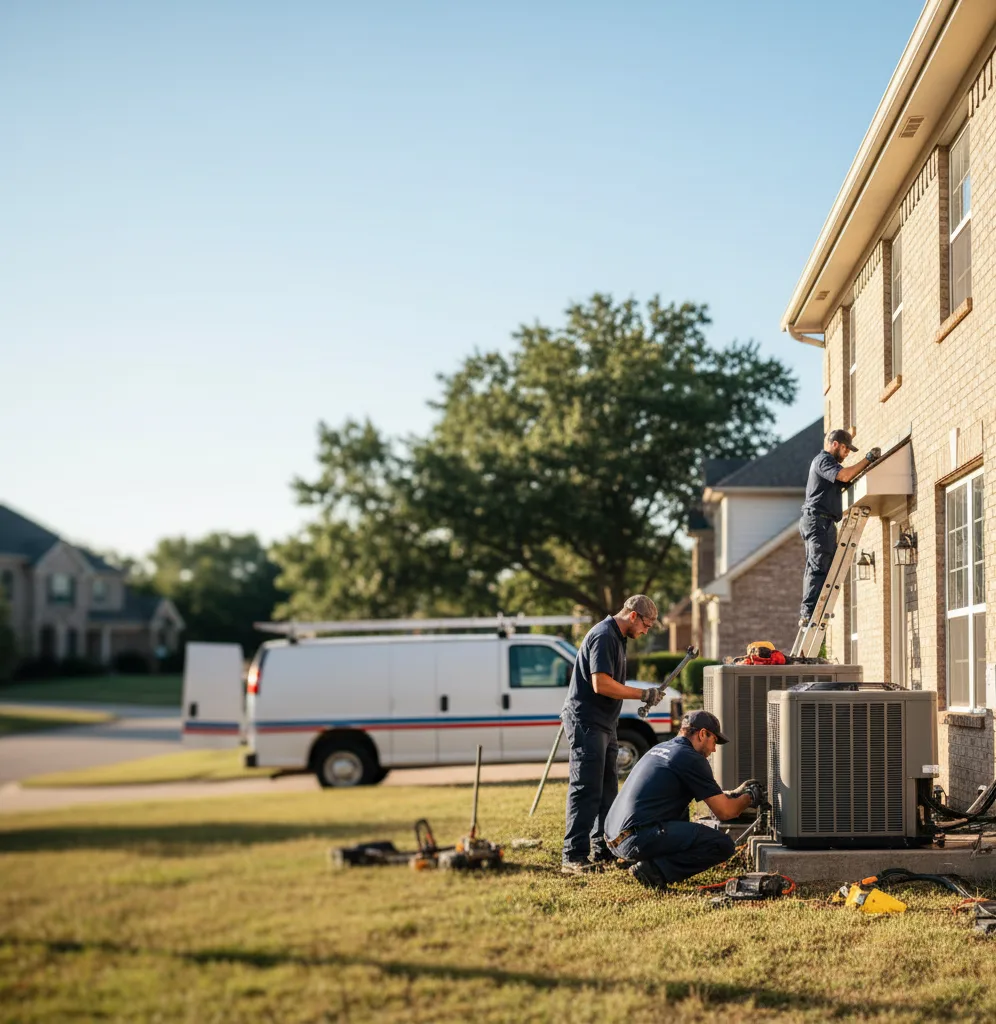
Weak airflow from vents, ice on the outdoor unit, or warm air on hot days usually point to a specific mechanical or electrical fault rather than a general drop in performance. A technician starts by measuring temperature differentials across the evaporator coil and checking static pressure in the ductwork. These readings often show whether the problem lies in a failing capacitor, a clogged filter, a low refrigerant charge, or a motor pulling too much current. Once the root cause is isolated, the repair focuses on restoring proper operation without swapping parts that are still within tolerance.
Capacitors weaken over time and prevent the compressor or fan motor from starting reliably. Refrigerant leaks show up at soldered joints or through corrosion on the coil fins, gradually cutting cooling capacity. Contactor points pit and stick, creating intermittent operation that is tough to diagnose without direct measurement. Homeowners can note whether the indoor blower runs nonstop while the outdoor unit stays off, or whether both units try to start but shut down after a short time; those observations help narrow the likely fault before the technician arrives.
FAQ

Short cycling often comes from an oversized system, a dirty filter that restricts airflow, or a failing thermostat that misreads room temperature. The technician checks the temperature split across the coils and reviews the recent run times logged by the control board. Once the cause is identified the repair focuses on restoring steady operation rather than masking the symptom.
The price depends on the location of the leak, whether access requires removing panels or moving ductwork, and how much refrigerant must be recovered and replaced. Small leaks in accessible lines are often less expensive than those inside the coil itself. A full diagnosis is needed before an accurate range can be given.
Most filters slide out from a marked compartment near the indoor unit and can be swapped without tools. If the system still runs poorly after a new filter is installed, the next step is a check of the blower wheel and evaporator coil for deeper buildup. A service call then confirms whether the issue is limited to airflow or something further in the refrigeration circuit.