HVAC · the USA
Each visit follows a documented checklist that is reviewed before the technician leaves the site. Findings are recorded with measurements rather than general statements.
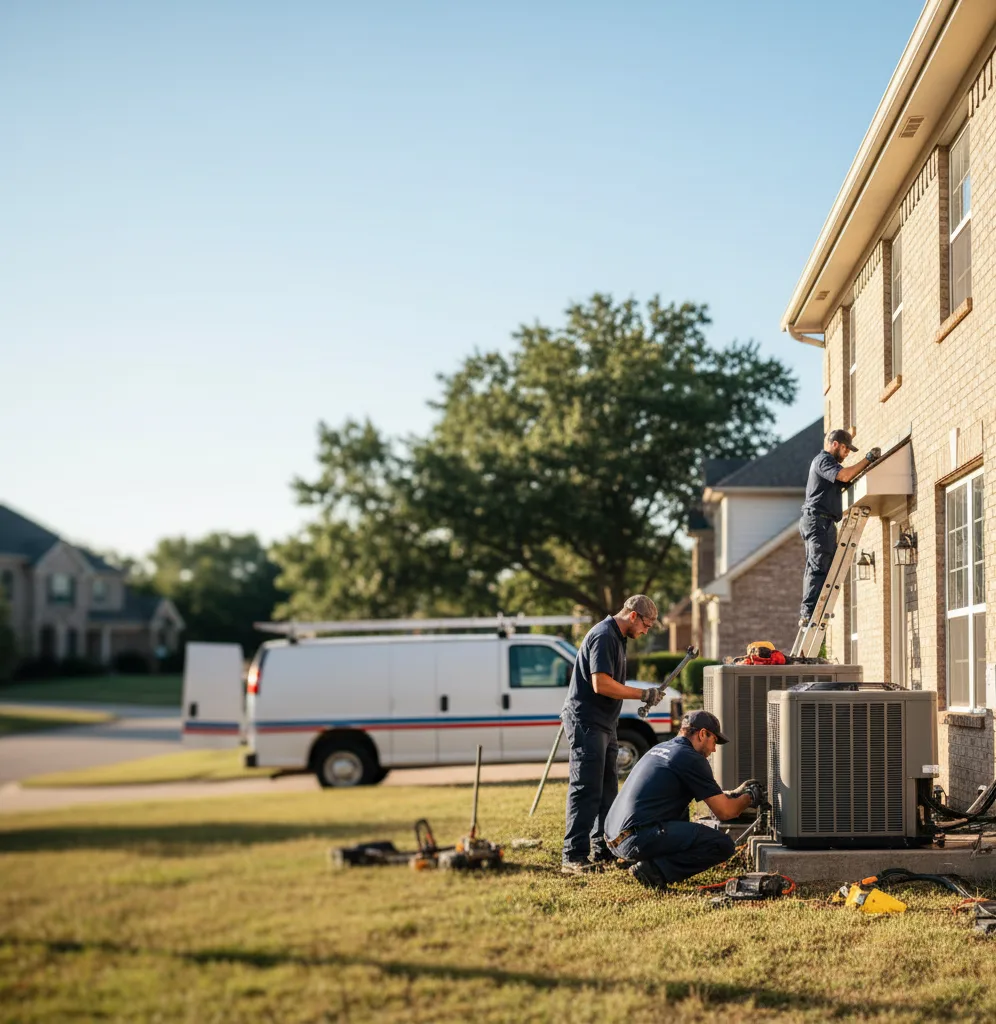
A maintenance visit starts with a visual check of the outdoor unit, indoor air handler, and accessible ductwork. Technicians measure temperature differentials across the evaporator coil, test static pressure, and confirm electrical terminals are tight. They also look at the condensate pan and drain line for buildup that can lead to overflow. These steps catch early signs of imbalance or restriction without taking the system apart.
Homeowners often notice uneven temperatures between rooms or longer run times before the desired setpoint is reached. During inspection, low refrigerant levels, dirty coils, or worn blower belts frequently turn up as root causes. Technicians document each measurement and explain which readings fall outside normal ranges so the owner understands the current condition of the equipment.
FAQ

Short cycling often comes from an oversized system, a dirty filter that restricts airflow, or a failing thermostat that misreads room temperature. The technician checks the temperature split across the coils and reviews the recent run times logged by the control board. Once the cause is identified the repair focuses on restoring steady operation rather than masking the symptom.
The price depends on the location of the leak, whether access requires removing panels or moving ductwork, and how much refrigerant must be recovered and replaced. Small leaks in accessible lines are often less expensive than those inside the coil itself. A full diagnosis is needed before an accurate range can be given.
Most filters slide out from a marked compartment near the indoor unit and can be swapped without tools. If the system still runs poorly after a new filter is installed, the next step is a check of the blower wheel and evaporator coil for deeper buildup. A service call then confirms whether the issue is limited to airflow or something further in the refrigeration circuit.