HVAC · the USA
We measure the home, review duct condition, and confirm equipment fit before any work begins. The same technician who performs the assessment usually returns for the heating system repair work and the installation so questions can be answered without repeating details.
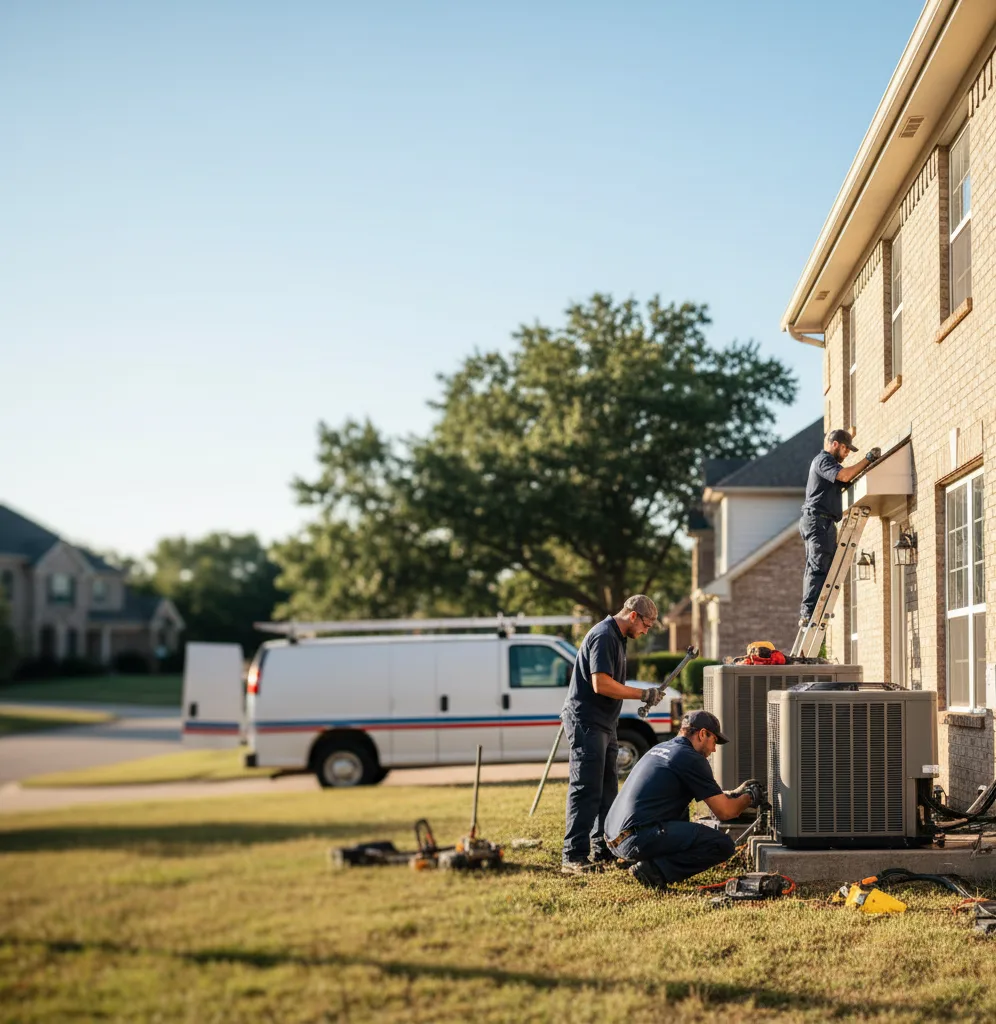
A furnace that runs constantly yet leaves some rooms cool usually has worn heat exchangers or weak blowers. Short cycling, where the unit starts and stops every few minutes, often points to a cracked exchanger or clogged filter housing. Rising utility bills without changes in usage habits can also mean the burner is no longer firing at full efficiency. Homeowners sometimes notice a metallic smell when the heat first turns on; that odor frequently comes from internal components that have begun to overheat. When these patterns appear together, replacement becomes more practical than repeated repairs.
Technicians begin by shutting off gas and power, then disconnect the old unit. The new furnace is positioned on a level pad and connected to the existing supply and return ducts. Gas lines are reattached with new shutoff valves, and the flue is checked for proper slope and sealing. Electrical connections are made to the dedicated circuit, and the condensate drain is routed if the model produces water. Once everything is secured, the system is started and combustion readings are taken to verify safe operation. Ongoing HVAC Maintenance helps protect the new equipment.
FAQ

Short cycling often comes from an oversized system, a dirty filter that restricts airflow, or a failing thermostat that misreads room temperature. The technician checks the temperature split across the coils and reviews the recent run times logged by the control board. Once the cause is identified the repair focuses on restoring steady operation rather than masking the symptom.
The price depends on the location of the leak, whether access requires removing panels or moving ductwork, and how much refrigerant must be recovered and replaced. Small leaks in accessible lines are often less expensive than those inside the coil itself. A full diagnosis is needed before an accurate range can be given.
Most filters slide out from a marked compartment near the indoor unit and can be swapped without tools. If the system still runs poorly after a new filter is installed, the next step is a check of the blower wheel and evaporator coil for deeper buildup. A service call then confirms whether the issue is limited to airflow or something further in the refrigeration circuit.