HVAC · the USA
Every repair begins with model-specific documentation pulled from the manufacturer. Technicians record voltage and pressure readings at each stage so the next person who opens the panel sees exactly what was measured.
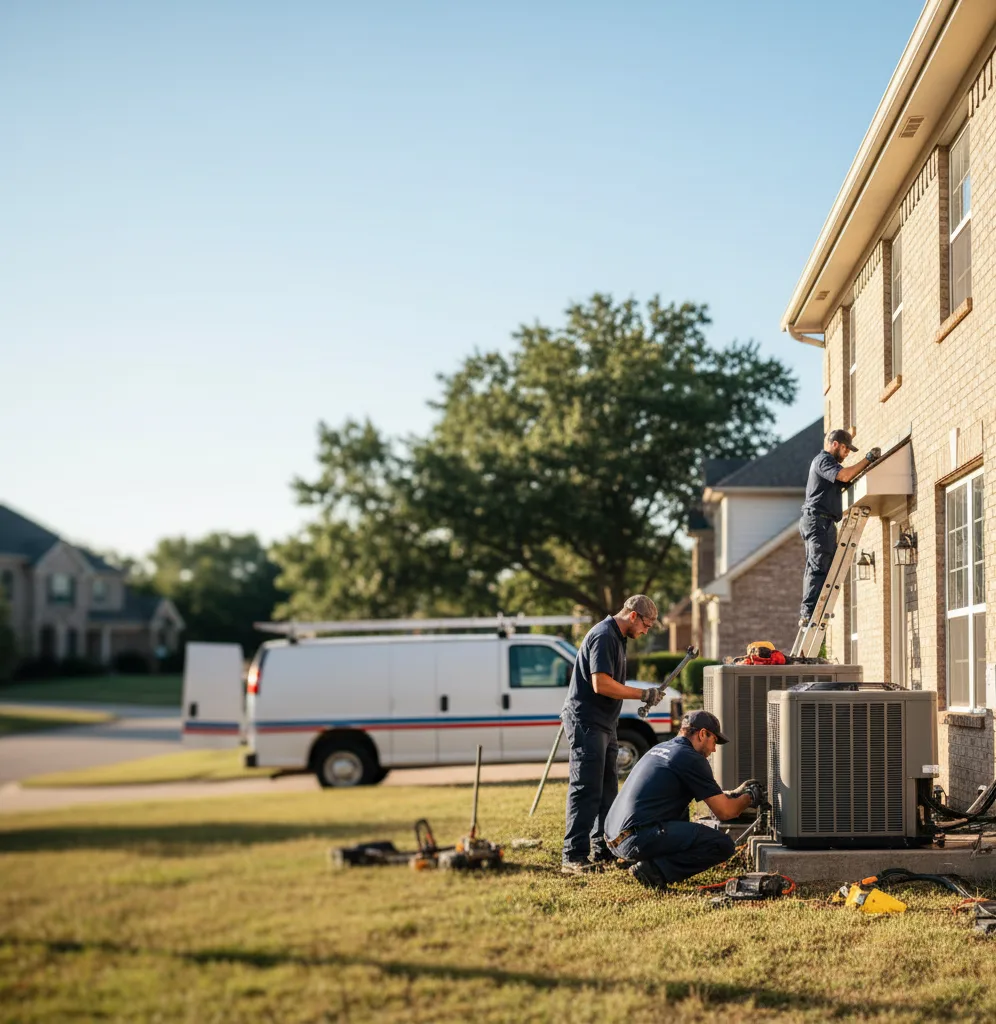
Many homeowners assume low heat output means the unit needs more gas or a new burner assembly. Often the problem traces to restricted return air, a dirty blower wheel, or a failing capacitor that slows the motor. A technician measures static pressure across the filter and coil first, then checks the temperature rise between return and supply. When the rise falls outside the manufacturer range, the cause is almost always mechanical restriction or electrical underperformance rather than combustion failure. Correcting the airflow restores normal output without replacing major parts.
These noises commonly come from metal expanding against a loose mounting bracket or from delayed ignition that lets gas build up before it lights. A visual inspection of the burner compartment and a check of the flame sensor usually locate the source within minutes. Homeowners can rule out loose ductwork by listening at each register while the system runs; if the sound stays near the furnace itself, the issue is internal rather than in the distribution system.
FAQ

Short cycling often comes from an oversized system, a dirty filter that restricts airflow, or a failing thermostat that misreads room temperature. The technician checks the temperature split across the coils and reviews the recent run times logged by the control board. Once the cause is identified the repair focuses on restoring steady operation rather than masking the symptom.
The price depends on the location of the leak, whether access requires removing panels or moving ductwork, and how much refrigerant must be recovered and replaced. Small leaks in accessible lines are often less expensive than those inside the coil itself. A full diagnosis is needed before an accurate range can be given.
Most filters slide out from a marked compartment near the indoor unit and can be swapped without tools. If the system still runs poorly after a new filter is installed, the next step is a check of the blower wheel and evaporator coil for deeper buildup. A service call then confirms whether the issue is limited to airflow or something further in the refrigeration circuit.